
Discover TÜV-certified GoogleTest with Agentic AI for C/C++ testing!
Get the Details »


Whitepaper
Want a sneak peek at what’s inside the whitepaper? Take a look below.
Learn how better UX testing improves customer retention. This whitepaper covers why customer experience is critical for competitive advantage, the ROI of improving user interfaces, common UI testing challenges organizations face, and how AI-powered solutions like Parasoft Selenic help teams overcome these obstacles while implementing a holistic testing strategy.
For organizations to be successful in today’s highly competitive Business to Consumer (B2C) and Business to Business (B2B) markets, it’s all about the customer experience. There’s disruption in almost every market segment, with rapidly-changing competitive landscapes (when was the last time you rode in a taxi?), all while it’s easier than ever for your customers to switch to alternative solutions. So, while customers need a reason to stay, they are constantly demanding new capabilities. These demands are driving quality at speed, driving the adoption of Agile and DevOps processes, as companies know that delivering innovation and differentiation to the market first is what enables them to win the battle.
There’s a strong business case for delivering and constantly improving customer experience. Data shows that user interfaces make up 40% of development effort and 47-66% of a project’s code can contain 80% of the unforeseen fixes after delivery. This is all while a full 70% of projects fail due to lack of user acceptance. The user interface is where our customers use our products – an impressive back-end architecture means nothing to them if your application is harder to use than your competitors.
The ROI is clear: a customer experience ROI study by Watermark Consulting showed that user experience (UX) leaders outperform competitors in the stock market, 45 points on the S&P index. Companies who built their brands on user experience are leading the pack, such as Amazon, Google, Uber, Lyft, and AirBnB.
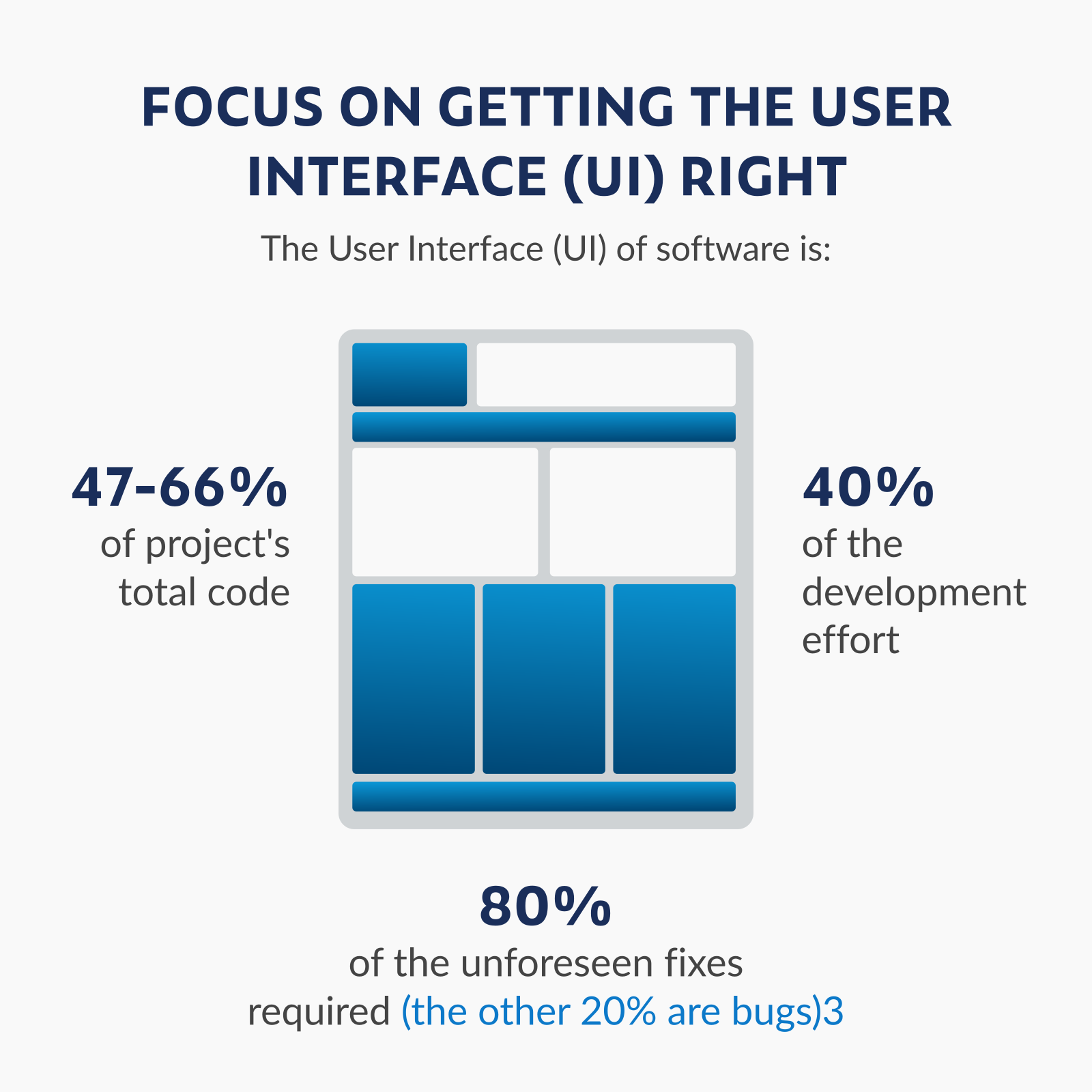
Data also shows that software development organizations are already spending considerable effort UX testing, with some teams spending 80% of their testing effort on the user interface.
Since the UI represents such a significant portion of testing, it’s strategic to focus on efficiency gains in the UI testing process. This means automating repetitive UI testing tasks, and preserving precious manual UI testing efforts for your rich, interactive, and exploratory testing activities. But without a reliable, continuous, automate-first approach to quality, you won’t be able to keep pace with development and deliver at the speed of Agile.
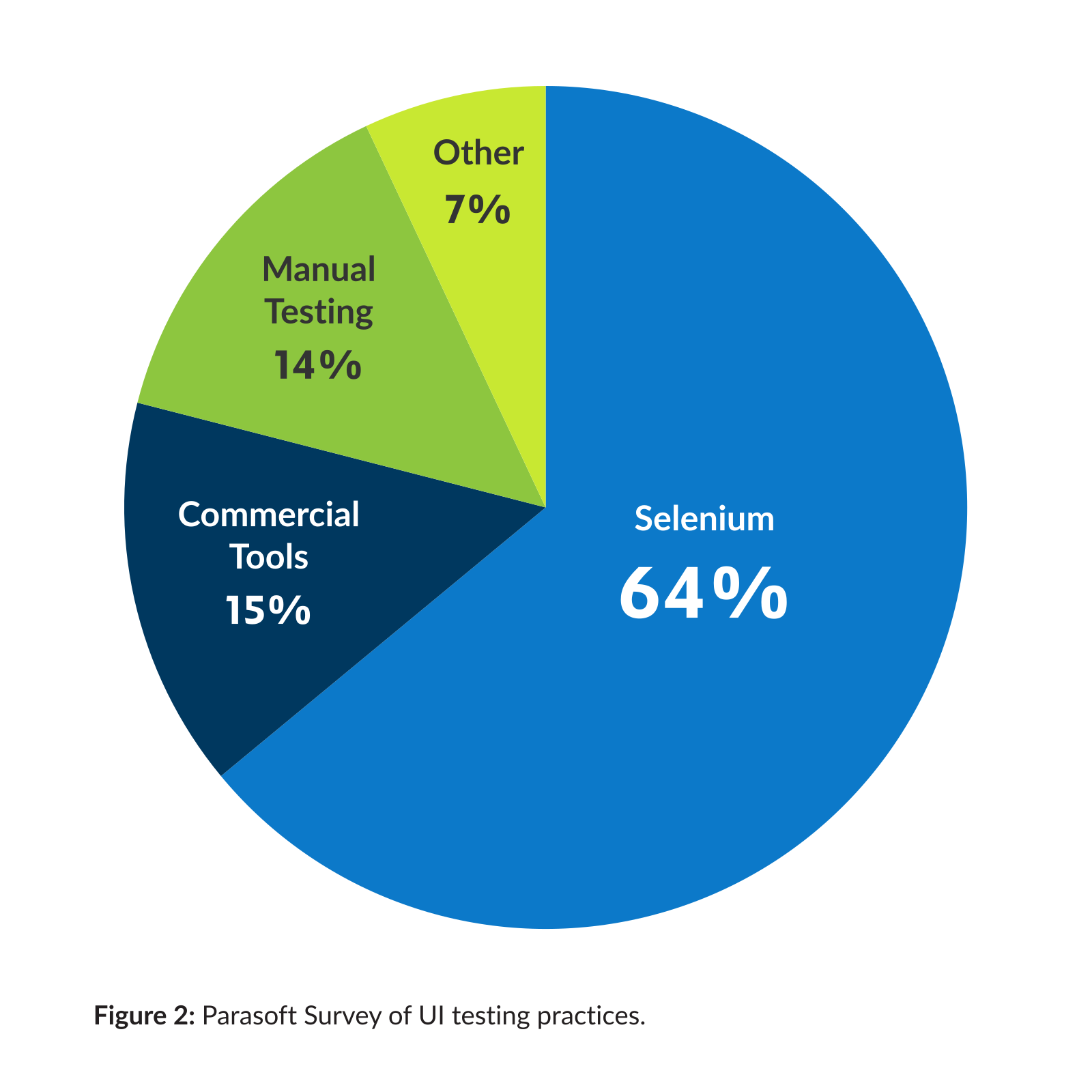
The data also shows that the majority of UI testing is being automated by organizations around the world with the open-source framework Selenium. Selenium is a mature technology, widely-adopted, facilitates execution on a wide array of technologies (browsers, devices, etc.), and is heavily supported by the open-source community.
But despite adopting Selenium, or other automated UI testing tools, many software development organizations are struggling to scale their UI test automation, pointing to a number of key challenges, as shown in the results from a recent industry survey in the figure below. Clearing these hurdles leads to more efficient UI validation and increased test coverage, which ultimately results in better customer experience. More importantly, more efficient automated testing means precious manual testing time can be dedicated to specific usability testing and improvements.
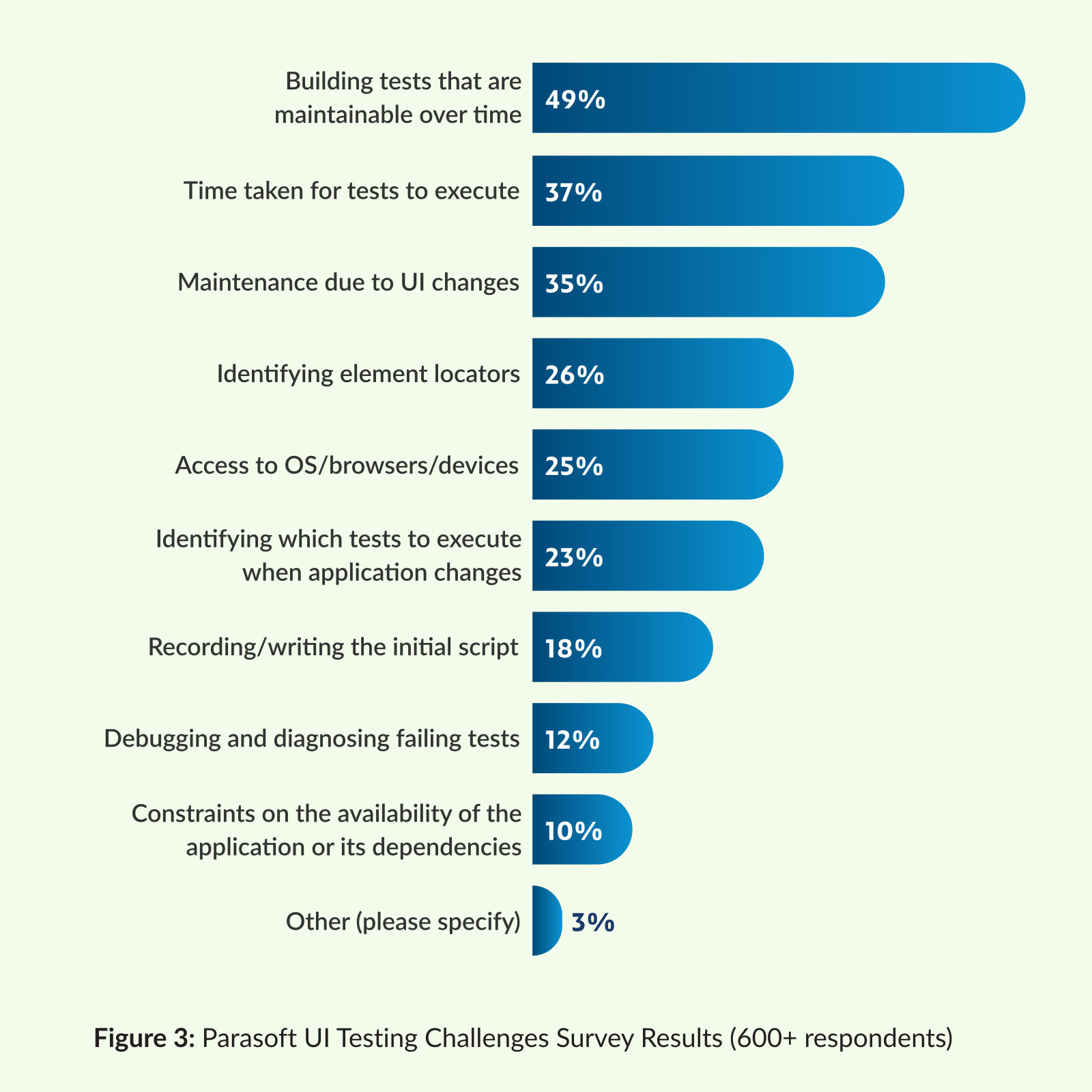
Organizations that conquer these UI testing challenges are driving innovation and success by rapidly delivering superior user experiences to market.
To solve these challenges without having to abandon the Selenium framework, teams can add Parasoft Selenic to their UI test automation toolkit.
Leveraging AI, Parasoft Selenic works with a user’s existing Selenium tests, to enhance the Selenium framework. Parasoft Selenic self-heals Selenium tests at runtime, and provides testers with automatic recommendations to fix their UI tests that have broken as a result of application UI changes. These enhanced maintenance features help teams reliably move forward to deliver releases on time.
Organizations using Parasoft Selenic report demonstrable ROI in the key areas of challenge that are preventing organizations from benefiting from the promises of Agile/DevOps:
A strategic testing practice allows you to focus on the scenarios that are critical to validate the customer experience. It is important that you do both manual and automated testing of the UI, where the purpose of automated testing is to expose regressions in existing functionality, while manual testing is used to focus on the usability of new capabilities — but this is only a part of the holistic testing strategy.
The ideal way to establish an effective continuous quality strategy is to allocate your resources in such a way that critical portions of the application are tested as early as possible, spending the most time and effort on building quality into the application with deep code analysis, unit testing, and API testing. Parasoft’s complete suite of quality tools can help you make this a reality.
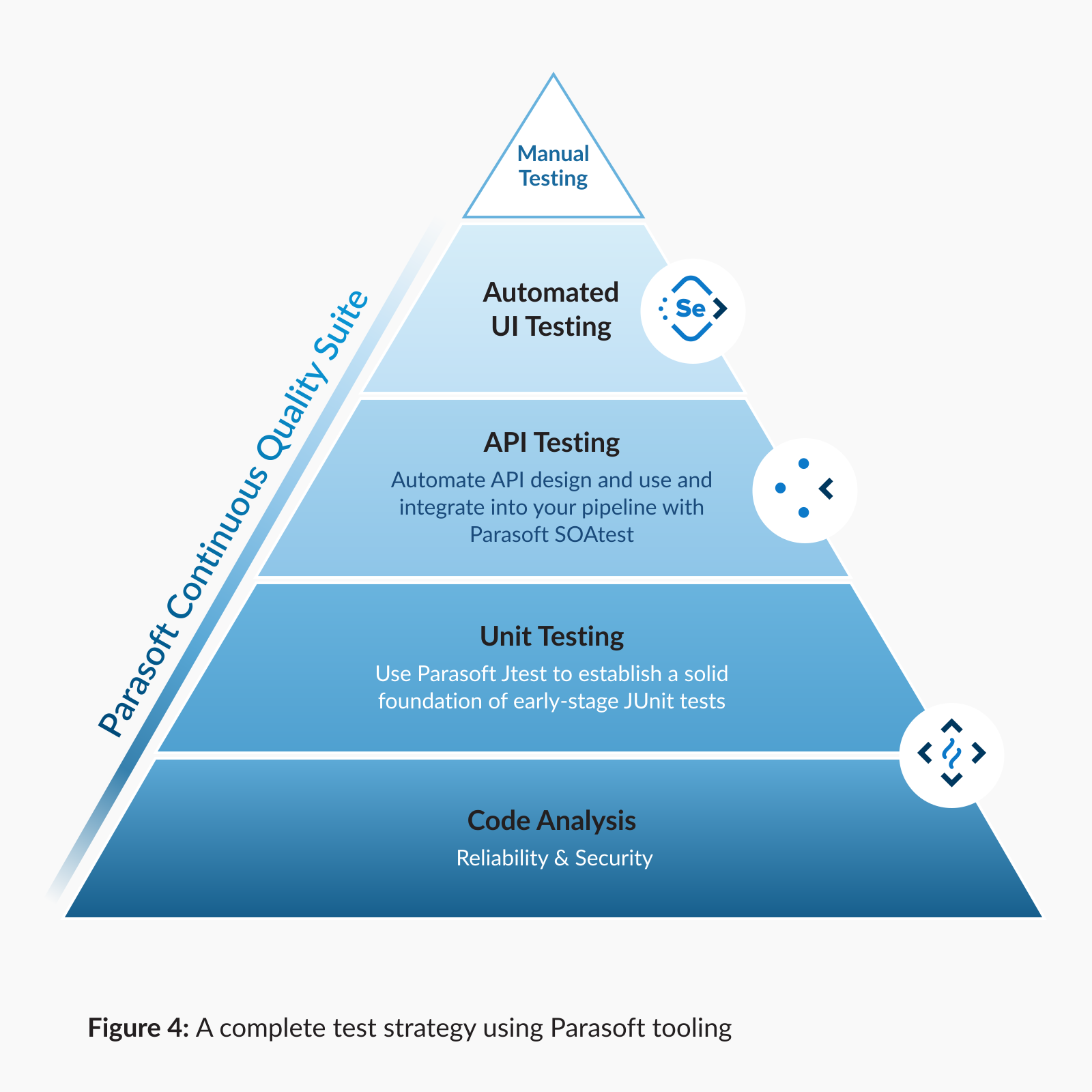
Parasoft has been leading the software testing industry with innovations that enable the Global 2000 to accelerate software delivery without sacrificing quality or security. From deep code analysis and unit testing, to API and UI testing to shift-left performance testing, and service virtualization, Parasoft is the only vendor able to give teams everything they need to make continuous quality a reality and deliver on the promise of Agile and DevOps.

Ready to dive deeper?


